

US-Iran conflict: Why Economic Fury has barely touched crypto
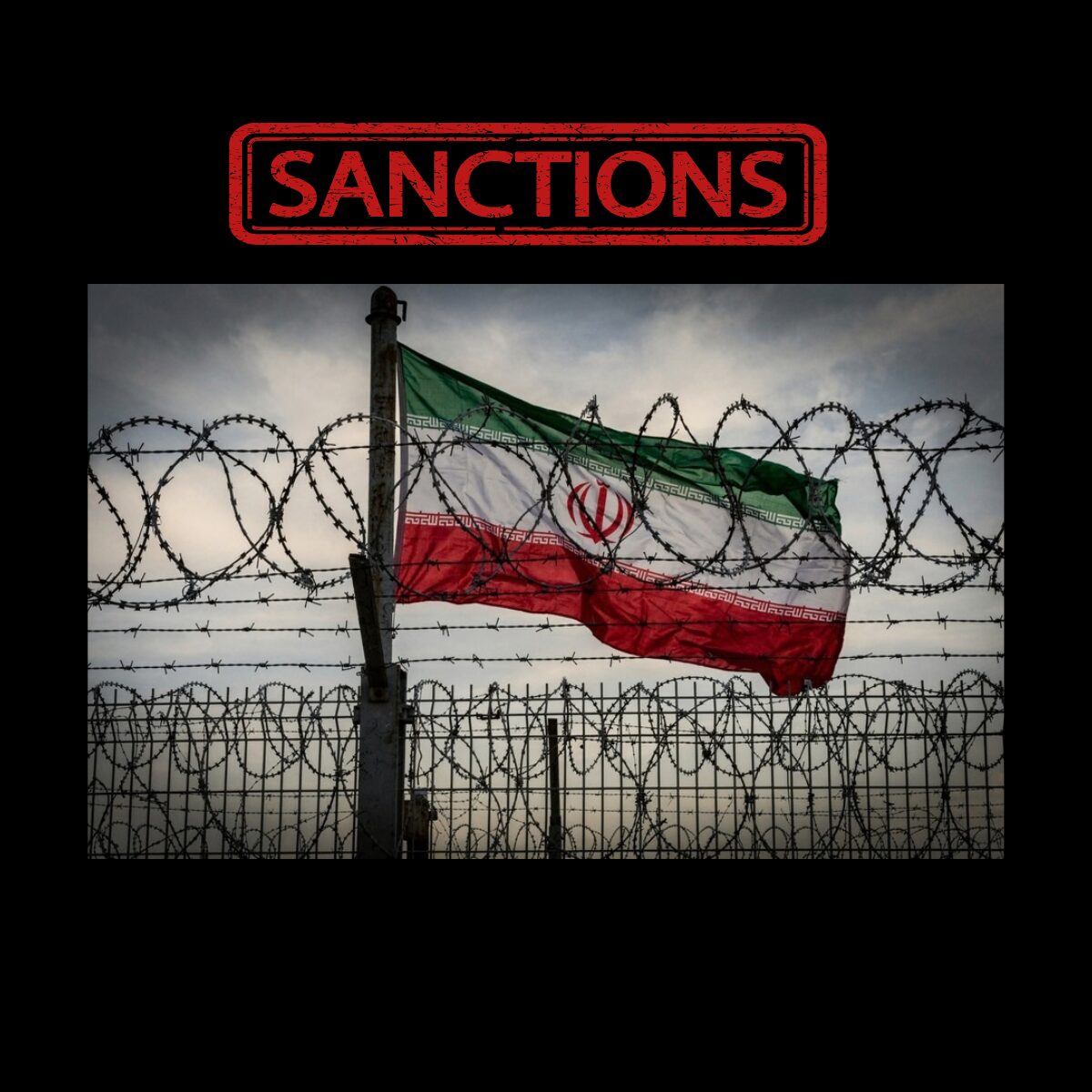
Following the 8 April ceasefire between the US and Iran, Washington moved from military escalation to economic pressure. Operation Economic Fury, announced almost a week later, is designed to restrict Iran’s revenue streams through maritime controls, sanctions and financial measures. The campaign follows the confrontation over shipping through the Strait of Hormuz and shows that, while the kinetic phase of the war has eased for now, the conflict is continuing through economic coercion.
Operation Economic Fury also has a cryptocurrency dimension, although this appears less extensive than its focus on other asset classes. Stablecoins such as USD Coin (USDC) and Tether (USDT) enable the rapid transfer of dollar-equivalent value across blockchain networks. Because many stablecoins operate through smart contracts, which are programs designed to run on existing blockchain infrastructure, these assets can often be frozen by their issuers. This distinguishes them from the native cryptocurrencies of many blockchains, which are generally harder to freeze or control.
Stablecoin firms have already played a visible role in disrupting illicit finance linked to the conflict, freezing assets in cases where enforcement action had not yet caught up. Operation Economic Fury marks a broader escalation, extending pressure across multiple asset classes and entity types through sanctions and advisories.
Cryptocurrency also appears in allegations around Iranian demands for safe-passage payments through the Strait of Hormuz. These tolls have reportedly been payable in crypto since the early days of the ceasefire. On 1 May, the US Office of Foreign Assets Control (OFAC) published an advisory warning against the payment of such tolls.
Two recently sanctioned Tron wallet addresses were also frozen from transacting in Tether, highlighting the role of private-sector enforcement within the crypto ecosystem. Tron operates the T3 Financial Crime Unit (T3 FCU), a collaboration with Tether and blockchain analytics firm TRM Labs, designed to identify, freeze and disrupt illicit finance networks using the Tron blockchain.
While compliance initiatives such as T3 FCU are an interesting development, they have not fundamentally changed the picture for Iran-linked crypto activity. Although some commonly used stablecoins can be frozen, and sanctions against Iran have widened across other asset classes, crypto enforcement under Operation Economic Fury remains narrow.
The sanctions are limited to the two Tron wallet addresses mentioned above, both reportedly connected to Hizballah financing. Even Israel’s National Bureau for Counter Terrorism Financing (NBCTF), which has historically been more willing than OFAC to designate wallet addresses, has only sanctioned 19 addresses since Economic Fury began, and just three further addresses since the conflict with Iran began on 28 February.
The low prevalence of crypto wallet addresses in Operation Economic Fury sanctions listings, and in sanctions databases more widely, may reflect the difficulty of reliably attributing wallet addresses to sanctioned entities or entities at risk of designation. OpenSanctions currently reports only 2,457 sanctioned addresses, 0.1% of total entities, underlining how limited this category remains compared with other forms of sanctions data.
Even where stablecoins can be frozen, enforcement still depends on knowing which wallet addresses to target. That remains difficult because blockchain wallets are not automatically tied to real-world identities. Investigators often have to rely on user mistakes, transaction patterns, exchange records, or other evidence to connect a wallet to a person, company, or sanctioned network.
Despite the centralisation of many stablecoins and the technical ability to freeze funds, stablecoins are an increasingly important vector for illicit finance according to Chainalysis’ 2026 Crypto Crime Report, as state-backed illicit finance moves further on-chain.
The reason is that stablecoins are often only one part of a wider money laundering process. Chainalysis notes that value can move from stablecoins through Chinese “flying money” or fei qian networks, reducing the practical impact of freezing stablecoin assets. Similar challenges apply to other crypto-laundering techniques, including chain-hopping, where cross-chain bridges are used to move value from one blockchain to another.
These enforcement limitations may be visible in the two Iran-connected addresses announced as frozen under Operation Economic Fury. Balance history for both addresses shows that, despite their significant value, holdings have remained relatively stable since 2023. That flat balance persisted through both the Twelve Day War of 2025 and the current conflict involving the US, Israel, and Iran.
Analysis from Nominis also suggests the addresses did not behave in the same way as other previously observed Iranian Revolutionary Guard Corps (IRGC)-linked addresses. However, Nominis noted that this may reflect overlap with other illicit finance networks. This leaves open the possibility that the attribution to Iranian illicit finance is overconfident. In any case, the USD 344m frozen across the two addresses represents only a small fraction of Iran’s estimated crypto holdings, which stood at nearly USD 8bn in January 2026.
The limits of crypto enforcement are also visible in the fact that major Iranian exchanges remain untouched. Nobitex and Wallex, two influential players in the Iranian crypto ecosystem, have so far avoided Operation Economic Fury sanctions.
Reuters has previously drawn attention to Nobitex’s ownership, reporting that the exchange was operated by the Kharrazi family, which has close ties to Iran’s clerical establishment. These exchanges may be obvious candidates for future designation. Targeting them would likely have a greater impact on the Iranian government’s ability to use cryptocurrency than sanctioning isolated wallet addresses alone.
Illicit crypto finance is highly adaptive, with laundering techniques evolving quickly across networks, assets, and jurisdictions. Compliance teams need to match that pace with faster detection, sharper threat awareness, and a stronger understanding of emerging typologies.
FACT’s due diligence capability helps clients navigate this landscape with confidence, supporting informed engagement with digital assets while identifying and mitigating the risks they can present.
Timeline of Treasury Economic Fury sanctions
- 15 April – Sanctions targeting a shadow fleet network linked to Mohammed Hossein Shamkhani, alongside a gold-for-oil smuggling network operated by IRGC and Hizballah financier Seyed Naiemaei Badroddin Moosavi.
- 17 April – Sanctions against seven militia commanders involved in attacks on US forces in Iraq.
- 21 April – Sanctions against 14 individuals and entities in Iran, Turkey and the UAE involved in procuring weapons and weapons components for Iranian drones.
- 24 April – Further shadow fleet sanctions, alongside sanctions on Hengli Petrochemical (Dalian) Refinery Co., Ltd, China’s second-largest independent oil refinery.
- 28 April – Sanctions on Iranian rahbar companies, overseas shell companies that operate on behalf of banks to facilitate import and export payments.
- 1 May – Sanctions on Iranian exchange houses conducting trades independently of the formal banking system.
- 7 May – Sanctions on the Iraqi Deputy Minister of Oil Ali Maarij Al-Bahadly, as well as further Iran-aligned militia leaders.
- 8 May – Sanctions on individuals and companies in the Middle East, Asia and Europe which are part of the Shahed UAV supply chain.
- 11 May – Entities facilitating sale of oil between IRGC and China placed under sanctions.
Share This Story, Choose Your Platform!
Expanded UK Iran Sanctions: Why Database Screening Is Only a First Step
Read More →The UK’s expanded sanctions regime against Iran, effective from 29 September 2026, introduces significant new financial, trade and transport restrictions across sectors including energy, oil and petroleum products, petrochemicals, maritime [...]
Contact FACT
Get in touch with our team.
Whether you have a specific requirement or want to understand how we can help, our specialists are ready to talk. All enquiries are handled in confidence.