
Every day, high-value medicines move through increasingly complex global supply chains.
Before reaching patients, pharmaceutical products may pass through manufacturers, wholesalers, logistics providers, distribution centres, pharmacies and hospitals across multiple jurisdictions.
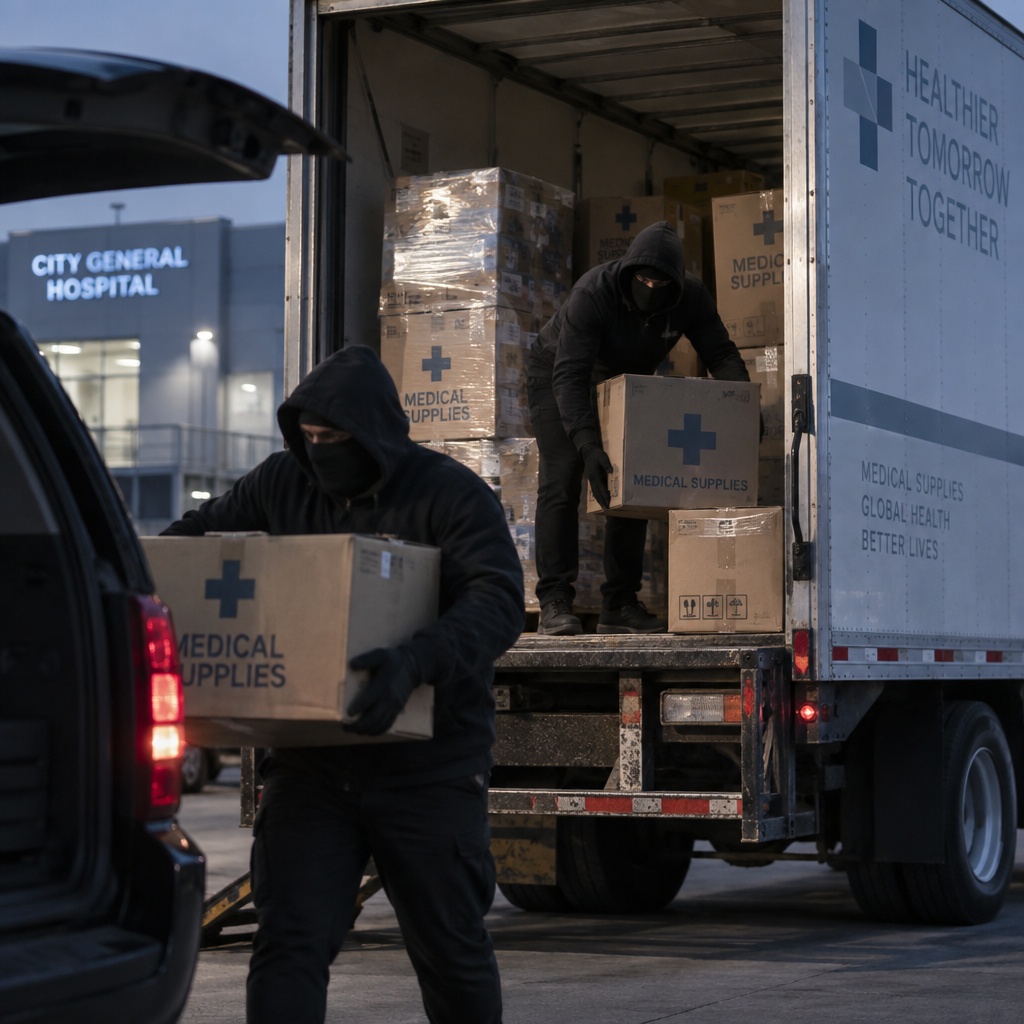
For organised crime, those movements create opportunity.
Recent analysis by the British Standards Institution (BSI) illustrates the scale of the challenge. Between 2024 and the first half of 2026, the BSI recorded 166 pharmaceutical cargo-theft incidents worldwide. Across just 56 incidents where losses were disclosed, the combined value was approximately US$42 million.
The methods used are equally concerning, with hijackings, trailer thefts and fictitious pick-ups increasingly targeting pharmaceutical cargo.
But the financial value of the stolen shipment tells only part of the story.
Why medicines make attractive targets
Several features of pharmaceutical products make them appealing targets for organised crime.
Some are high-value, relatively compact and capable of generating significant returns. Others are in short supply or in high demand. GLP-1 weight-loss medicines and speciality pharmaceuticals are among the products the BSI identifies as increasingly targeted by organised crime.
Unlike many stolen commodities, medicines also have an established consumer market.
A stolen television requires a buyer.
A stolen medicine may already have thousands of people searching for it.
That creates opportunities for stolen legitimate products to be diverted into illicit distribution channels, sold online, or moved across borders into markets where demand and prices are higher.
Cargo theft should therefore not be viewed simply as a logistics loss.
The crime does not end with the theft
What happens to a medicine after it is stolen may present the greater risk.
A pharmaceutical product removed from controlled distribution can no longer necessarily be assumed to have been transported, stored or handled according to required standards.
For temperature-sensitive medicines, including some injectable products, cold-chain disruption may affect product integrity, even when the packaging remains genuine.
Stolen medicines may also intersect with wider criminal activity. Authentic products, packaging, batch information and delivery devices can potentially support diversion or more sophisticated falsification.
The result is an important convergence:
Cargo theft can become pharmaceutical crime. Pharmaceutical crime can become a patient-safety issue.
Protecting the journey, not simply the destination
This changes how organisations should think about supply-chain security.
Physical protection remains essential. But locks, tracking devices and secure facilities alone cannot address a threat involving organised criminal networks capable of exploiting people, processes, information and third-party relationships.
Prevention increasingly requires intelligence-led action.
Which products are increasingly attractive to criminals? Which routes and locations face repeated targeting? Are fraudulent collections or fictitious carriers becoming more common? Could seemingly isolated incidents be connected?
The wider BSI cargo-theft data reinforces the point: organised criminal networks are adopting increasingly sophisticated methods, while insider involvement remains a feature of global cargo crime.
For pharmaceutical organisations, this means connecting security, logistics, compliance, intelligence and investigation rather than treating theft as an isolated supply-chain event.
Medicines in transit represent more than valuable cargo. They are products patients depend on.
When organised crime interferes with that journey, the consequences can travel far beyond the value of what was stolen.
Share This Story, Choose Your Platform!
Medicines in Transit: Why Pharmaceutical Supply Chains Attract Organised Crime
Read More →Every day, high-value medicines move through increasingly complex global supply chains. Before reaching patients, pharmaceutical products may pass through manufacturers, wholesalers, logistics providers, distribution centres, pharmacies and hospitals across multiple [...]
Contact FACT
Get in touch with our team.
Whether you have a specific requirement or want to understand how we can help, our specialists are ready to talk. All enquiries are handled in confidence.